
FUKUMOTO Shihoko: Sign of Wind – Focus on the works from the 1980s
2026.2.21 [sat] - 4.11 [sat] 11:00-18:00 Saturday -17:00 | Closed on Sundays, Mondays and National Holidays.
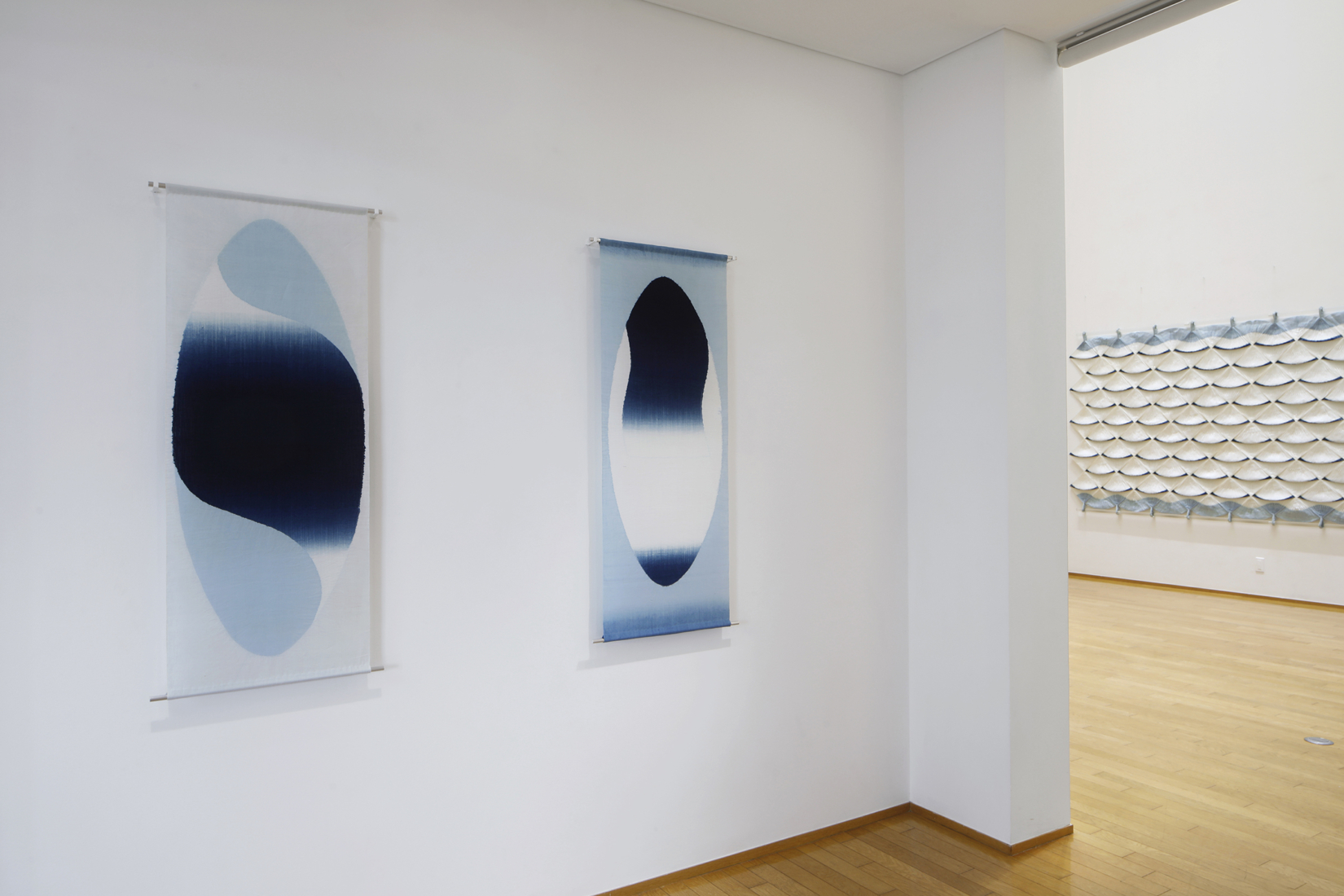
ARTCOURT Gallery is pleased to present a solo exhibition by Fukumoto Shihoko.
From the late 1970s, Fukumoto began producing works based on indigo dyeing. Rooted in an unceasing inquiry into the tradition of indigo and its materiality, her work unfolds through a singular mode of production and aesthetic sensibility, extending beyond conventional categories of dyeing and craft, continually renewing itself.
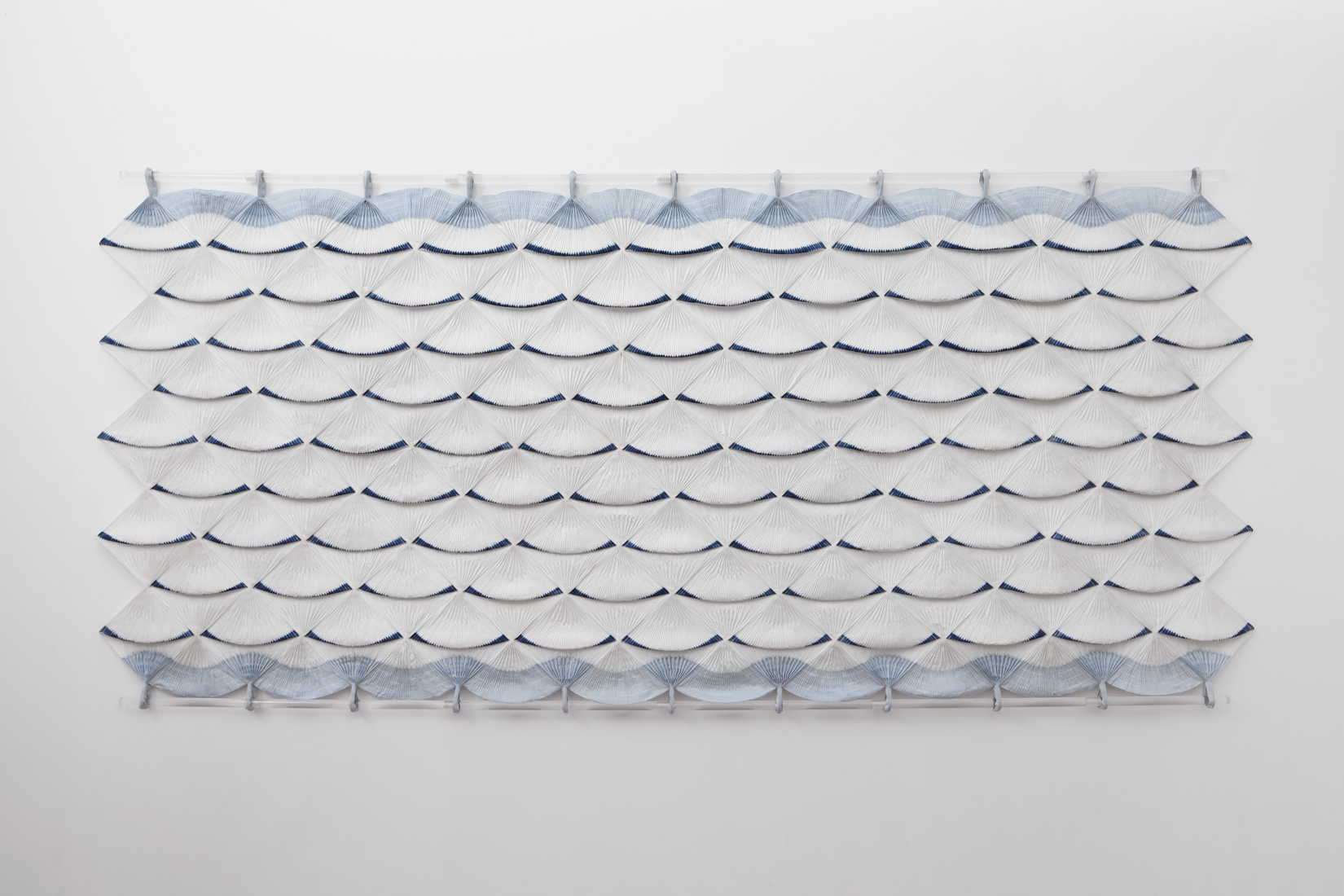
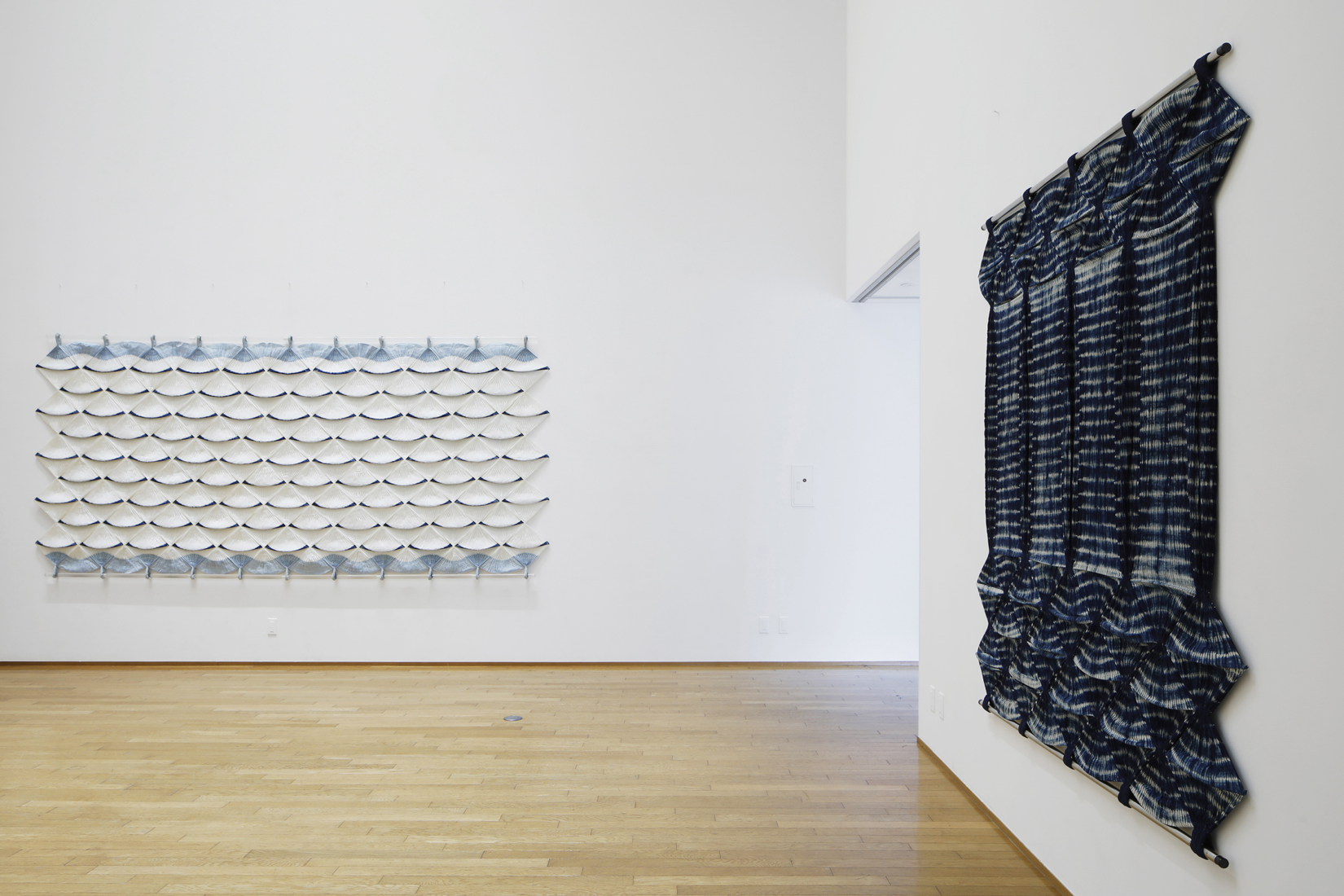
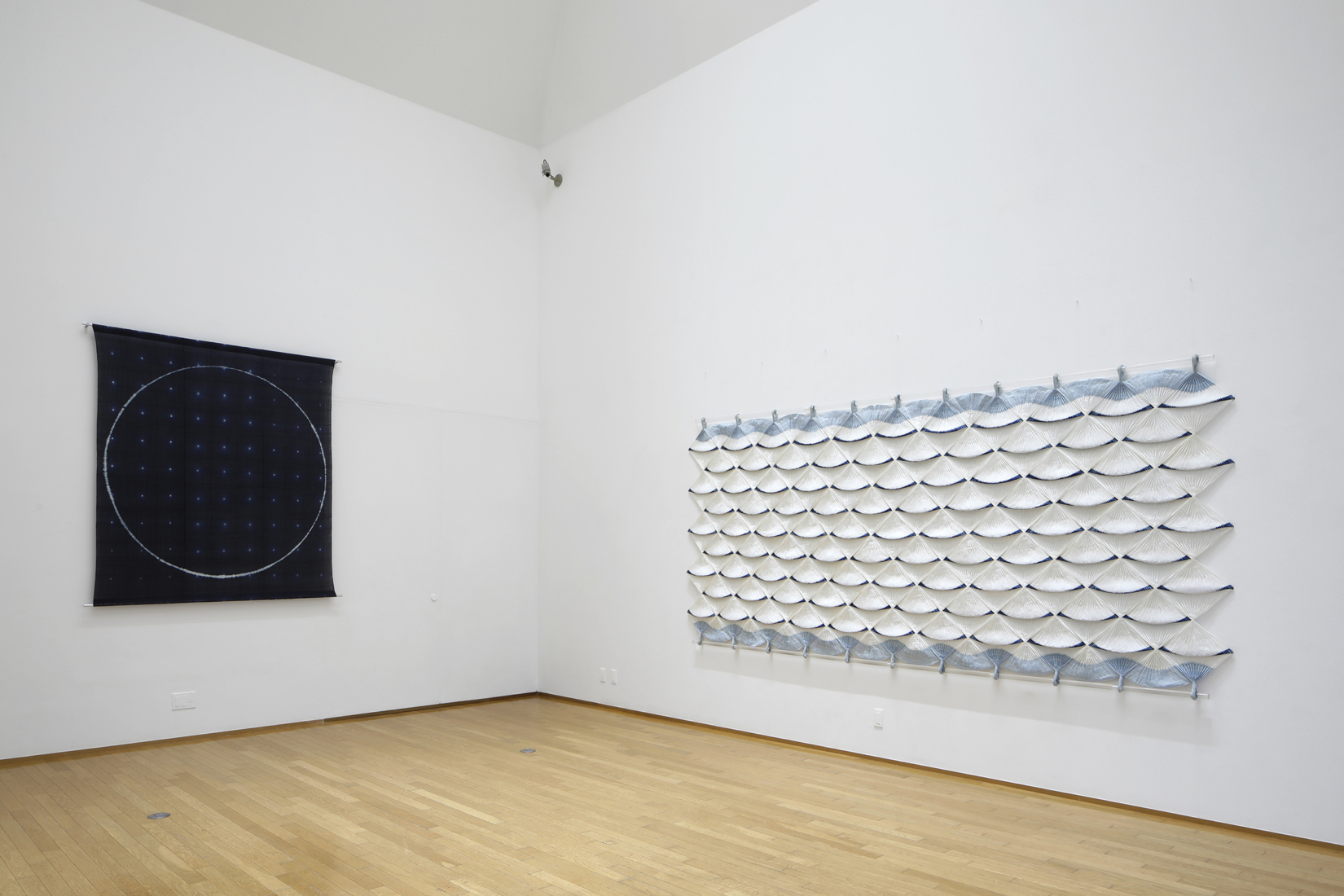
This exhibition focuses on the 1980s, an early phase in Fukumoto’s nearly half-century career of sustained experimentation. Centered on Sign of Wind (1987), a pleated semi-three-dimensional work that may be regarded as the point of departure for her practice as an indigo artist, the exhibition also brings together her earliest work, Sea Roar (1979), and works from the same period that were not publicly exhibited. It further includes her Firmament and Time Space series, in which shibori techniques and gradations of indigo are used to express her own conception of cosmic space.
Fukumoto entrusts her exceptional sensitivity to the indigo, drawing out the depth latent within a single length of fabric. From the deep indigo of the sea, through the layered cerulean bands stretching across the horizon, to the clear, open sky and the cosmos beyond, this exhibition offers an opportunity to trace the origins of her indigo expression, encompassing the full breadth of the natural world.
------------------------------
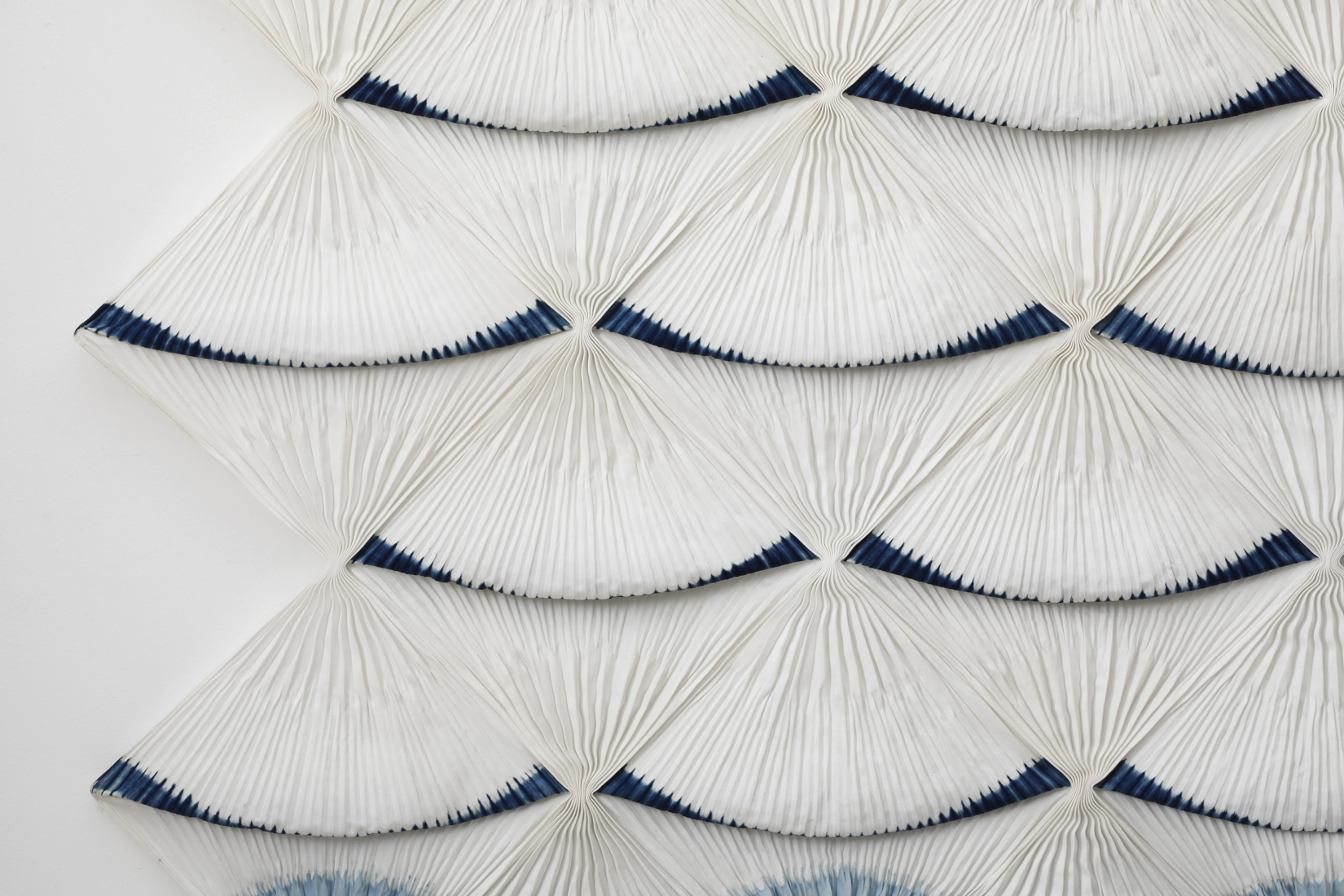
In her search for a “blue” capable of expressing her own ideal conception of space, Fukumoto Shihoko encountered indigo dyeing in the mid-1970s. For Fukumoto, indigo was not merely a color but a material presence that permeates fibers through water and air, emerging with striking clarity. Around this time, while working with shibori and immersion dyeing techniques, Fukumoto found inspiration in the ridges and contours of cloth sewn and bound for resist dyeing. By folding and stitching the cloth into pleated forms and dyeing it and then leaving portions of the threads in place, she developed a series of relief-like works composed of finely pleated, fan-shaped forms that repeat in alternating orientations. These works drew significant acclaim, earning top prizes at the 1st Japan New Crafts Exhibition and the 32nd Kyoto Kogei-Bijustu-ten (Kyoto Craft and Art Exhibition) (both in 1979).
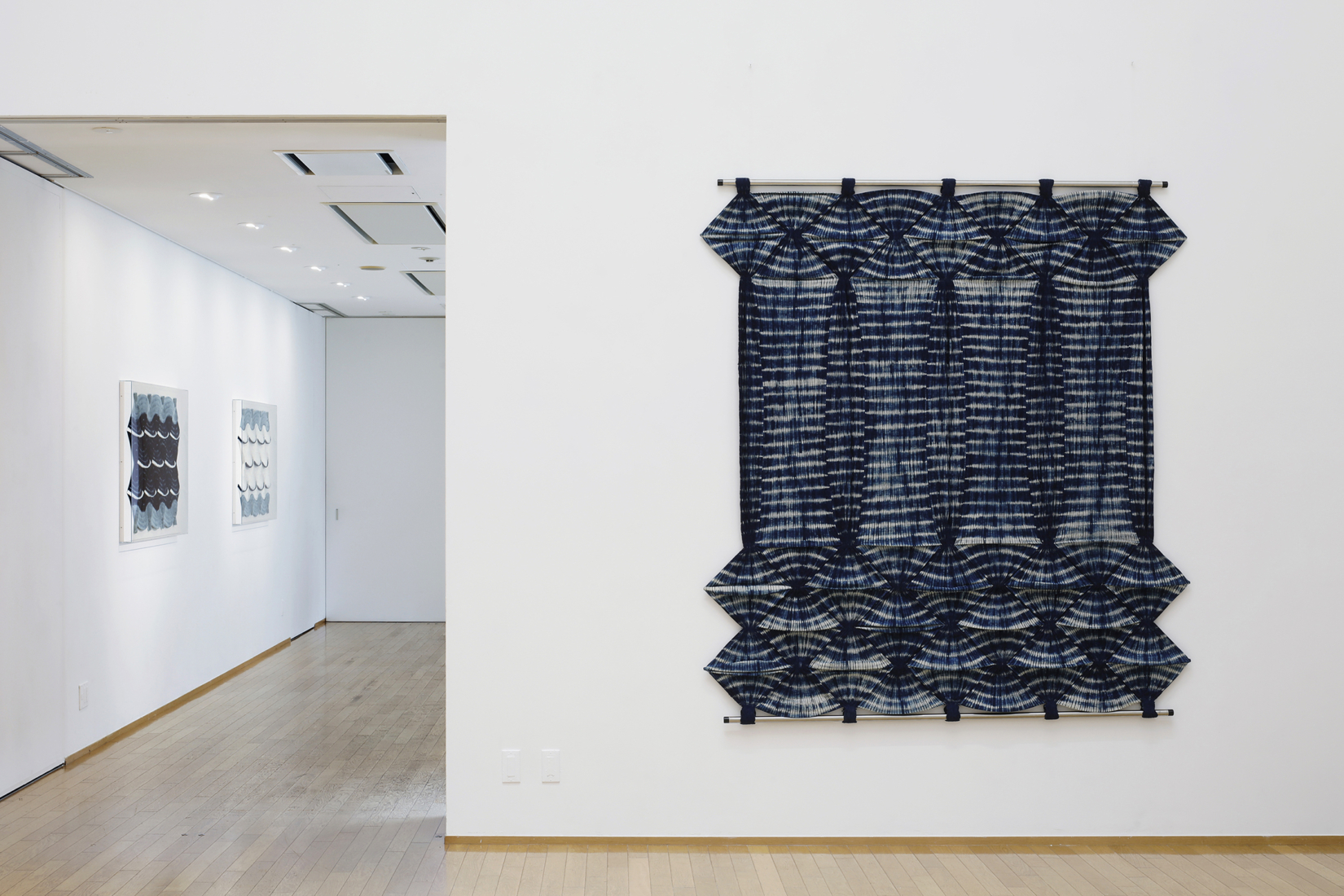
Shown again for the first time in approximately thirty-six years, Sign of Wind (1987) was originally exhibited at the 13th International Biennial of Tapestry in Lausanne, Switzerland, where it marked a turning point in the international recognition of Fukumoto’s indigo-based practice. Indigo develops its color as it is exposed to air after dyeing, accentuating the pleated structure of the work’s cloth through tonal differences between the peaks and valleys of the folds. The complex gradations of indigo in Fukumoto’s Wavelets series (1985), created prior to Sign of Wind, are achieved through Fukumoto’s distinctive technique of dasshoku-zome (bleach dyeing)[1]. This method allows for the controlled dyeing of indigo’s subtle intermediate to pale tones, often considered difficult to attain. These gradations interact with the three-dimensional spatial structure created by the cloth, giving rise to a finely articulated visual space. Sign of Wind, which can be seen as a culmination of a decade of pleated works refined since the late 1970s, arose from a bold conception: while drawing on patterns formed through controlled dyeing, Fukumoto allowed most of the fabric to remain undyed, so that the sparing presence of indigo stands in vivid contrast to the white of the cloth. “The more beautifully the indigo stands out, the more the presence of white intensifies,” she has noted. The cloth is thus treated not as a neutral support but as an essential element of the work, with its expression articulated three-dimensionally through the relationship between the fabric and the indigo, an approach that has remained consistent in her practice to this day. Indigo hues emerge and recede within the subtle white of the delicately lustrous Turfan cotton.[2] Enveloped in the woven rhythm of tonal variation between cotton and indigo, the viewer encounters a work that, as Fukumoto reflects, “came to express something that arose of its own accord, beyond the maker’s conscious intent, something greater than myself.”
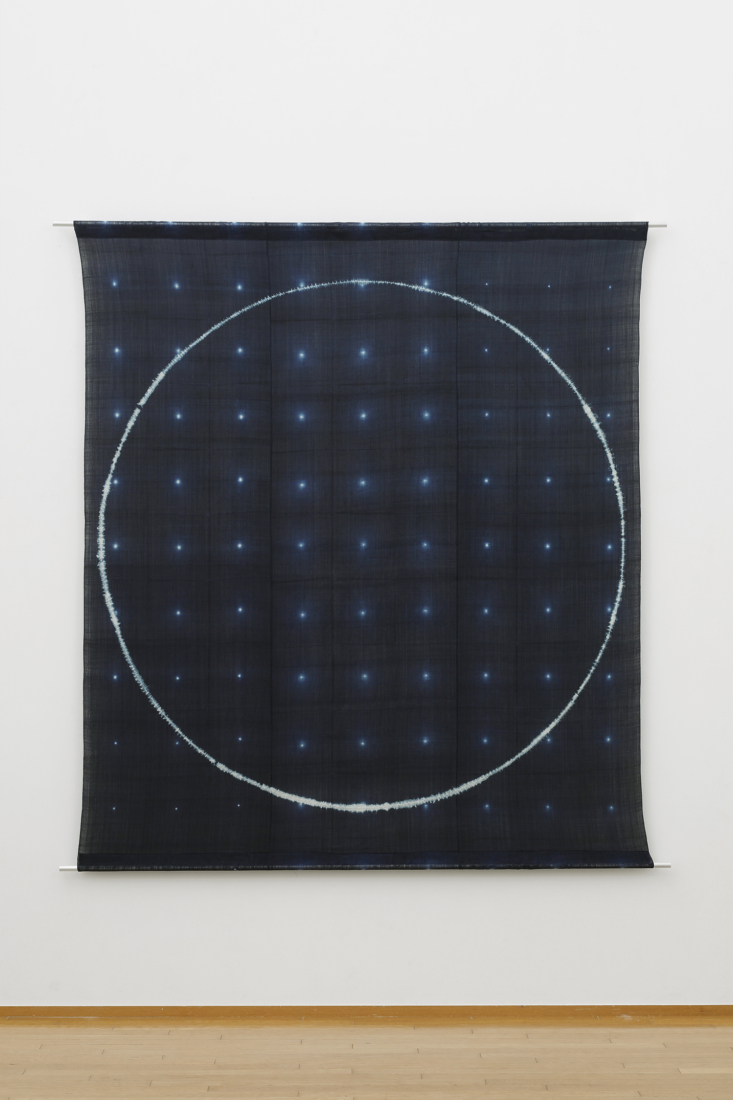
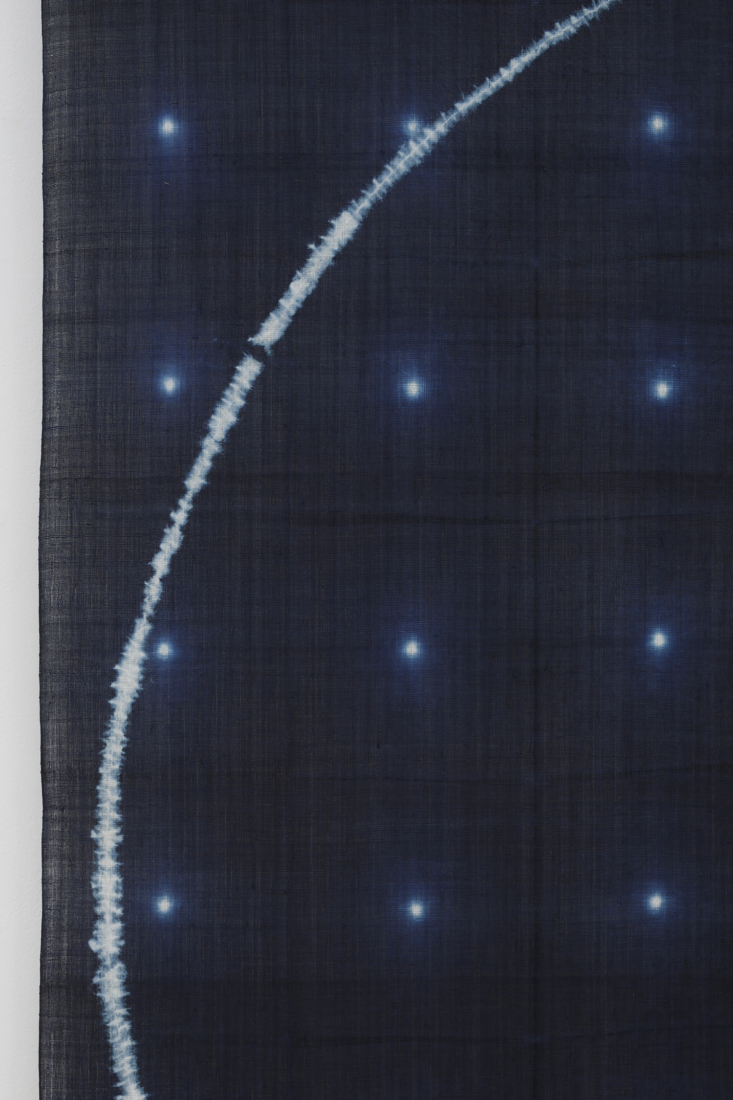
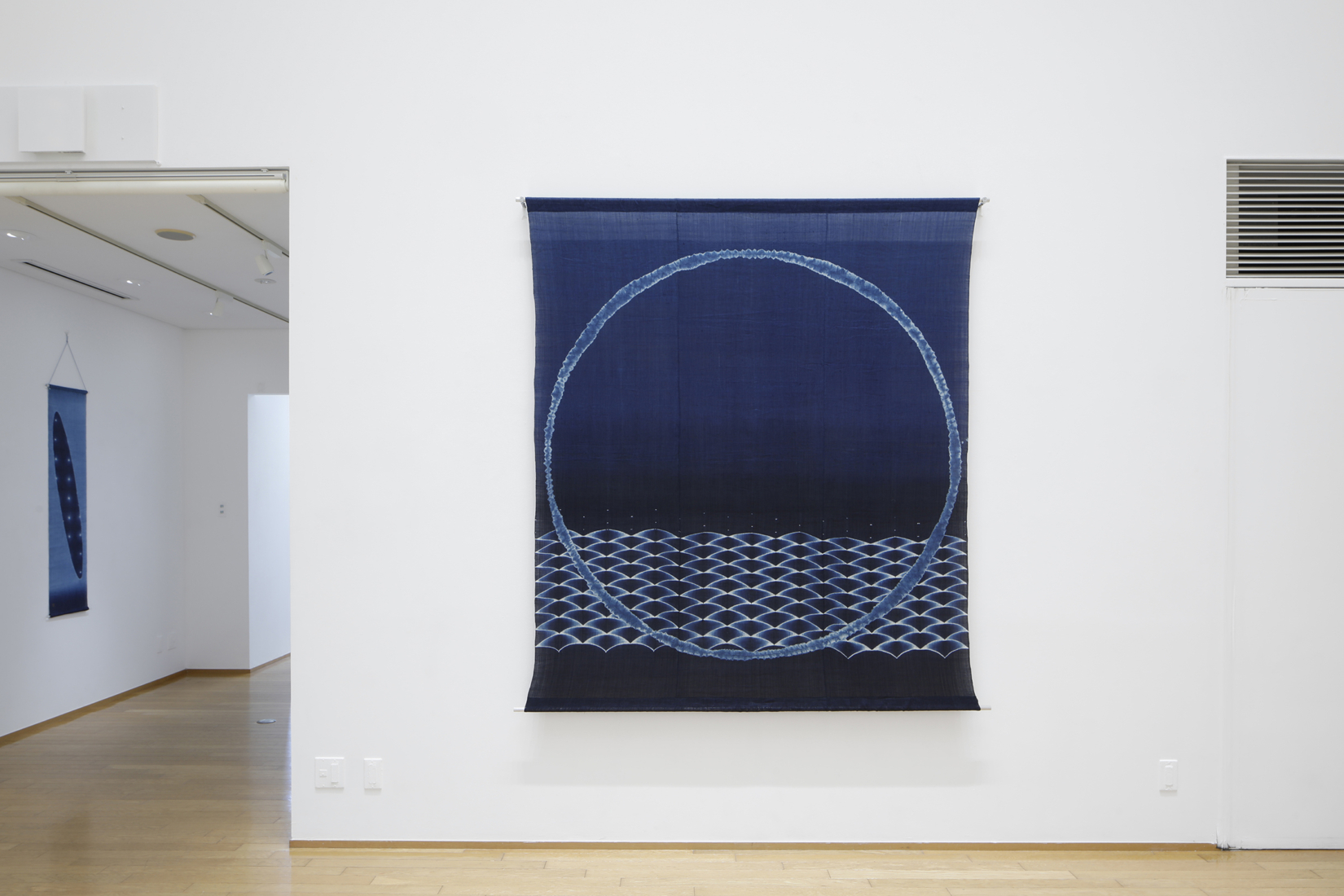
The Firmament series (1983- ), inspired by mandalas composed solely of circles and lines that Fukumoto encountered in Bhutanese temples in the early 1980s, envisions the cosmic order she senses within herself. On hand-spun ramie cloth[3] that allows soft gradations of dye to emerge, a large circle, gradations of blue, and the seigaiha wave pattern come together through successive, selective layers of dyeing. In the subsequent Time Space series (1991- ), Fukumoto moves away from the traditional seigaiha motif, replacing it with gradations that stand in tension with the white, producing a serene yet taut contrast against the deep indigo. Through her distinctive use of shimi-zome (stain dyeing) and yoroke , and by layering two lengths of cloth, abstracted images appear to waver across multiple planes. Permeating not only space but also time and the viewer’s inner consciousness, this series became the guiding thread in Fukumoto’s subsequent development.
[1] Dasshoku-zome is a technique in which cloth first dyed with deep indigo is immersed in boiling water containing lye and treated with the chemical reducing agent hydrosulfite, which discharges the dye, allowing the indigo to redistribute to generate gradations.
[2] Cotton cultivated in Turfan in China’s Xinjiang Uyghur Autonomous Region. Its fibers are exceptionally long, giving it a silk-like texture and luster. With modernization, harvesting and production became mechanized, making cotton of pre-1980s quality difficult to obtain.
[3] Historically, the Kaida Highlands in Nagano Prefecture were known for the production of hand-spun hemp cloth. Following World War II, hemp cultivation was prohibited under the GHQ occupation, and ramie was subsequently used in its place for hand-spun textiles. However, because hand-spun textile required considerable labor and were no longer economically viable, production was soon discontinued as cultivation shifted to other agricultural crops.
[4] Shimi-zome is a dyeing technique in which color is applied to dry cloth, often by tapping or dabbing, to create stain-like effects.
[5] Yoroke is a technique in which the weft threads are gently offset producing a wavering, irregular weave.
Related events
- 2.21 [sat] 15:00-17:00
Reception - 3.18 [wed] 18:00-20:00
Artist Talk
Fukumoto Shihoko x Nawa Kohei (Artist | Director of Sandwich Inc.)
*RSVP required (email: info@artcourtgallery.com / tel: 06-6354-5444), first 20 applicants. *Registration is now full.